
The Overlooked –
A series dedicated to people, ideas, inventions, and contributions that shaped society, the nation, or humanity, yet never received the recognition they truly deserved.
By Kuldeep Thusu ‘Pumposh’
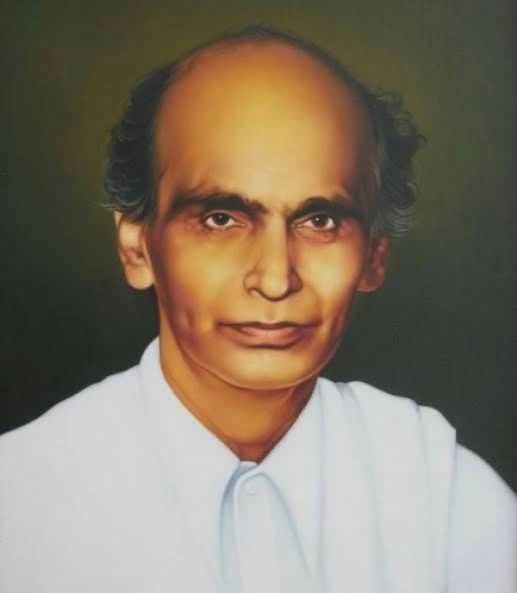
G.D. Naidu – India’s Forgotten Edison
Why Did One of India’s Greatest Inventors Fade from Public Memory?
- Have you ever heard of a kerosene-powered electric fan?
- Do you know who built India’s first juicer?
- Or the country’s first electric razor?
- What about a mechanical calculator?
- Or even an early vote-recording machine?
No?
OK. Then try these.
- Who played a pioneering role in developing India’s first indigenous electric motor?
- Who helped lay the foundation for one of the country’s earliest organised public transport systems?
- Who championed a new model of technical education decades before the world embraced hands-on learning?
- Who experimented with high-yield crop varieties and hybrid seeds long before agricultural innovation became a national priority?
Still no idea?
Now imagine this.
What if I told you that all these achievements came from a farmer’s son who never studied beyond the third grade?
Not in recent times…
But nearly a century ago.
This was a man who created or improved more than a hundred inventions, built industries, transformed public transport, experimented with agriculture, and tried to redefine technical education in India.
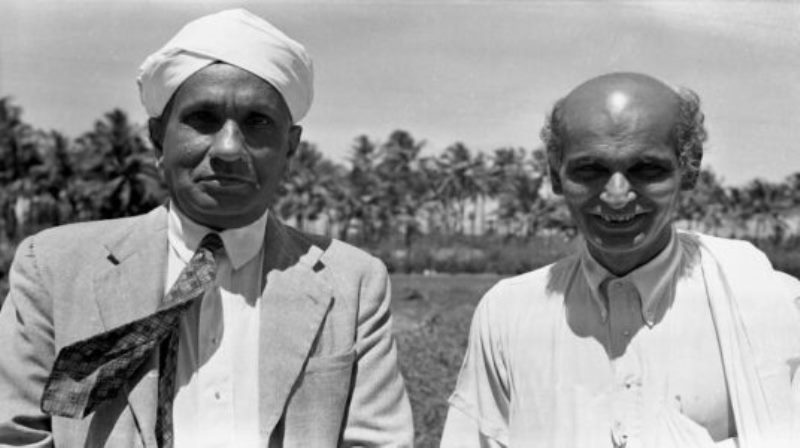
His brilliance was admired by Nobel laureate Dr. C. V. Raman, among others.
Yet today, very few Indians have even heard his name.
Which raises some uncomfortable questions.
– Why is G. D. Naidu almost absent from our textbooks?
– Why is his story rarely discussed in conversations about Indian science and innovation?
– How did a man often called “India’s Edison” slowly disappear from public memory?
Or perhaps the bigger question is this:
Did India forget one of its greatest inventors… or did we never truly recognise him in the first place?
The Birth of an Extraordinary Mind
In 1893, in the small village of Kalangal, near Coimbatore in present-day Tamil Nadu, a boy was born into an ordinary farming family.
His name was Gopalswamy Doraiswamy Naidu.
No one could have imagined that this child would one day become one of India’s most remarkable self-taught inventors.
Formal education never became a major part of his life.
Because of financial and family circumstances, he left school after the third standard.
For many, that would have marked the end of learning.
For Naidu, it was only the beginning.
Life itself became his classroom.
Curiosity became his teacher.
And every machine he encountered became a lesson waiting to be understood.
The Motorcycle That Changed Everything
Nearly a hundred years ago, there was no internet.
No online courses.
No engineering colleges within easy reach.
But G. D. Naidu possessed something far more valuable than any degree— An insatiable curiosity.
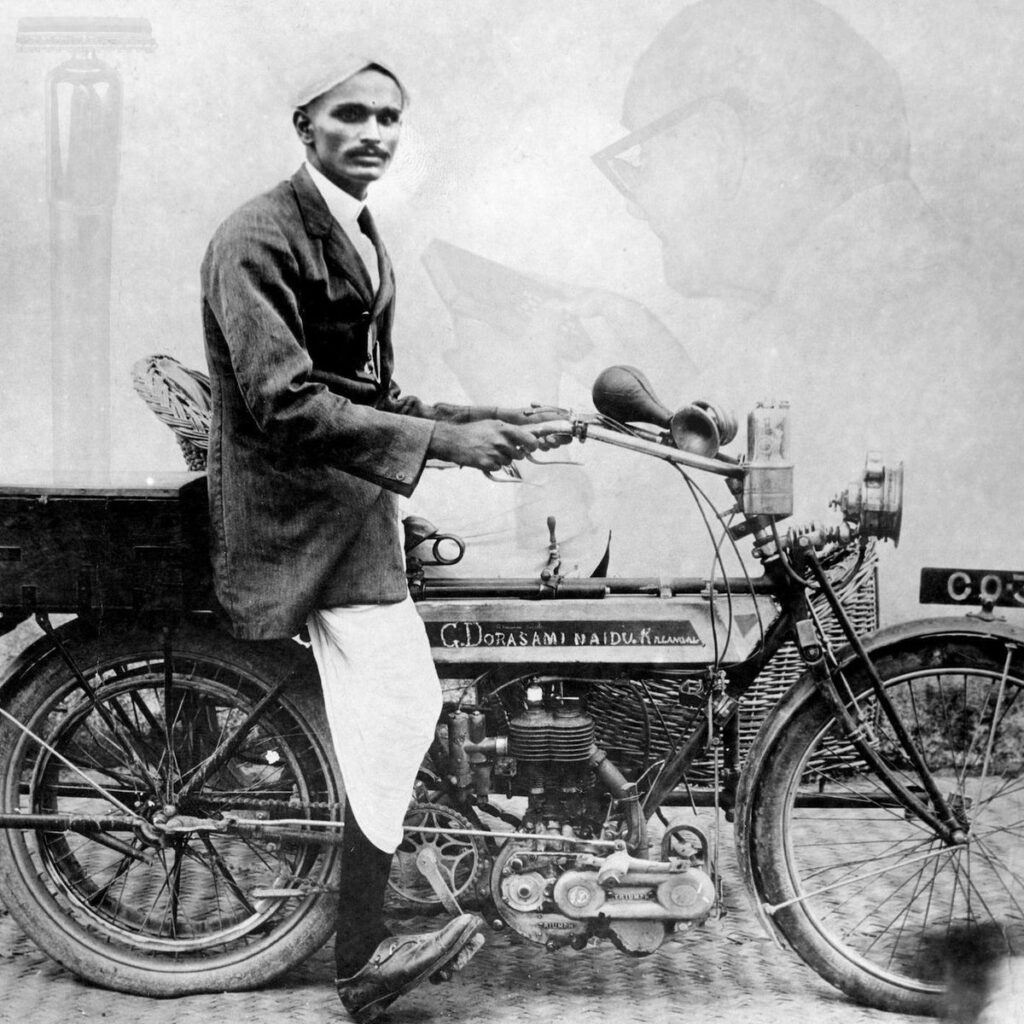
At around sixteen years of age, he saw a British officer riding a motorcycle.
Naidu admired the machine.
The problem was obvious.
He couldn’t afford to buy one.
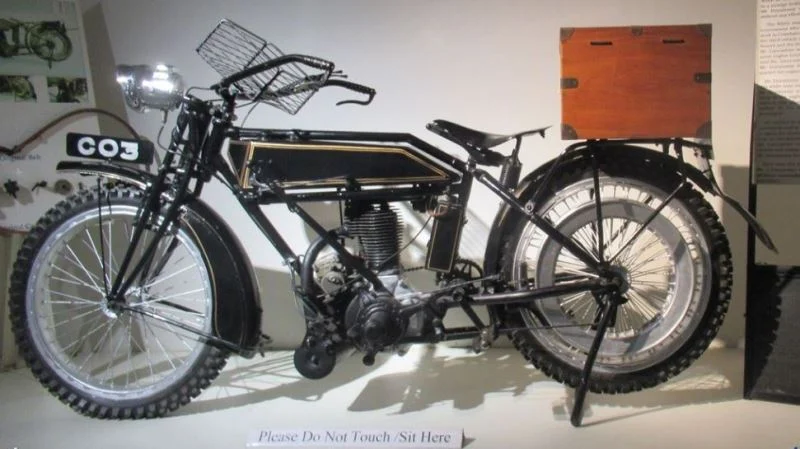
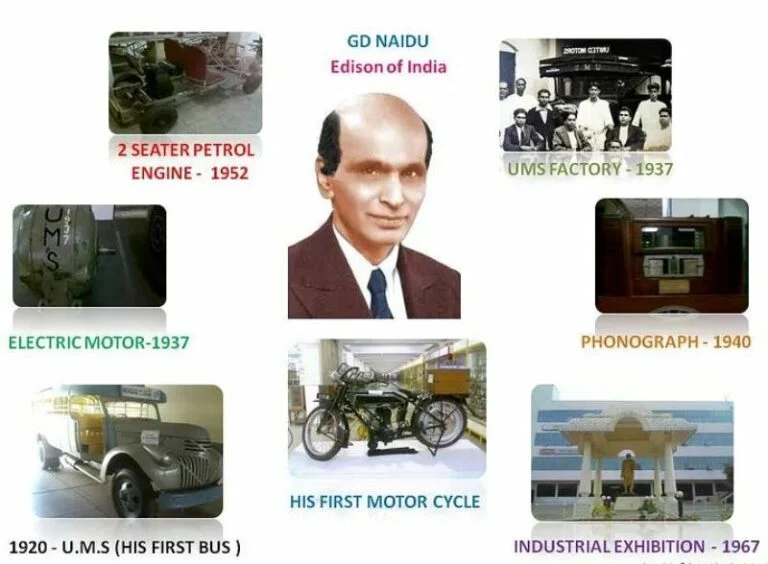
Instead of giving up, he took a job as a waiter in a hotel in Coimbatore, saved every possible rupee, and eventually bought his first motorcycle.
Most new owners often celebrate by taking their motorcycle out for a ride.
Naidu did something very different.
He dismantled it.
Every nut.
Every bolt.
Every gear.
Every moving part.
He carefully examined each component, understood how it worked, and then reassembled it.
Then he repeated the process.
Again.
And again.
No textbook taught him.
No professor guided him.
The motorcycle became his laboratory.
His curiosity became his engineering school.
Without realising it, he wasn’t merely taking apart a machine—
He was building an ‘inventor’.
That humble motorcycle became the university he never attended.
No degree.
No sophisticated laboratory.
No formal instructor.
Just an extraordinary determination to understand how things worked.
It was this relentless habit of questioning, experimenting, and learning that would later inspire a lifetime of innovations—many of them years ahead of their time.
When Every Machine Became a New Question
Taking apart a motorcycle was never the end of G. D. Naidu’s journey.
It was only the beginning.
He had no interest in becoming just another mechanic.
Repairing machines solved today’s problems.
Naidu wanted to solve tomorrow’s.
One question constantly occupied his mind:
“How can this machine be made better?”
That single question became the driving force behind almost everything he created.
Throughout his lifetime, Naidu is credited with developing or improving more than a hundred inventions. Many of them were remarkably ahead of their era.
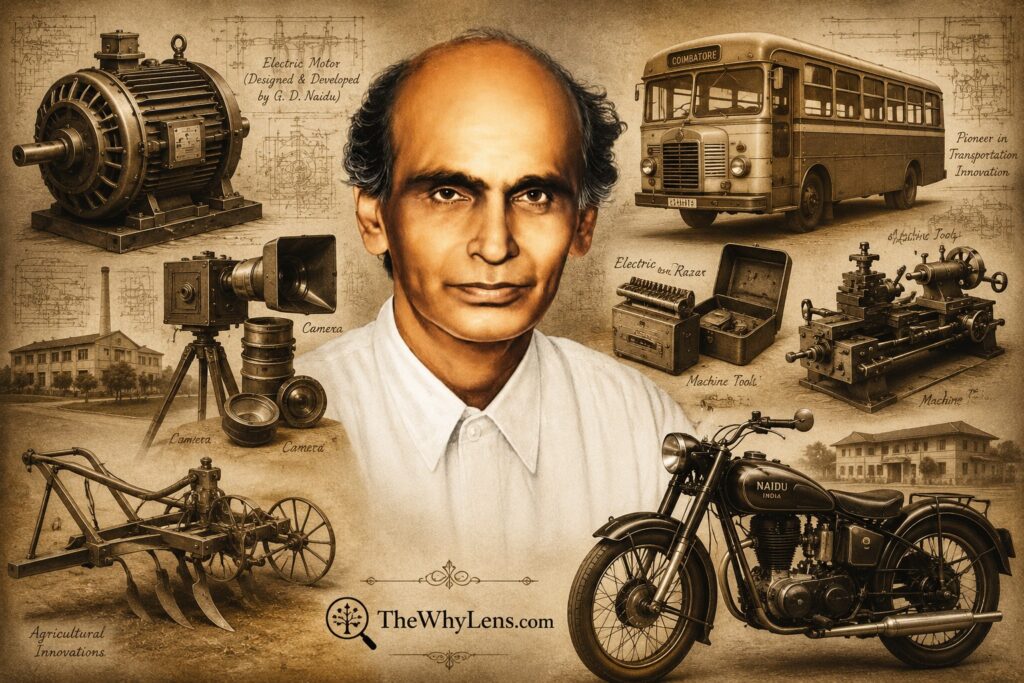
One of his earliest and most significant contributions was his role in developing India’s first indigenous electric motor—an important step at a time when the country depended heavily on imported technology.
He later designed an electric razor called Rasant, a product considered highly advanced for its time.
But his imagination refused to stay within conventional boundaries.
He developed a kerosene-powered fan, an idea that still sounds unusual even today.
He built one of India’s earliest fruit juicers, designed a mechanical calculator, worked on a vote-recording machine, and introduced improvements in radios, electrical appliances, and several mechanical systems.
For Naidu, invention was never about creating complicated machines to impress people.
It was about solving real problems.
Technology, in his eyes, had value only when it made everyday life simpler, more affordable, and more useful.
That philosophy explains why many of his innovations were not confined to laboratories. They were designed for ordinary people.
Today, when we hear the word innovation, we often imagine artificial intelligence, robotics, or space technology.
Naidu looked at innovation differently.
He believed that the greatest invention is the one that genuinely improves people’s lives.
Perhaps that is why his laboratory never belonged to a single discipline.
One day, he would be working on machines.
The next day, agriculture.
Then transport.
Then education.
Wherever he saw a problem…
He saw an opportunity to experiment.
It was this restless curiosity that transformed him from an inventor into a visionary.
One Bus That Helped Transform a City
Today, we take organised public transport for granted.
Buses arrive on schedule.
Routes are planned.
Maintenance follows established systems.
But such efficiency never appears by accident.
Someone has to imagine it first.
For G. D. Naidu, transportation was never merely a business.
It was an engine of economic development.
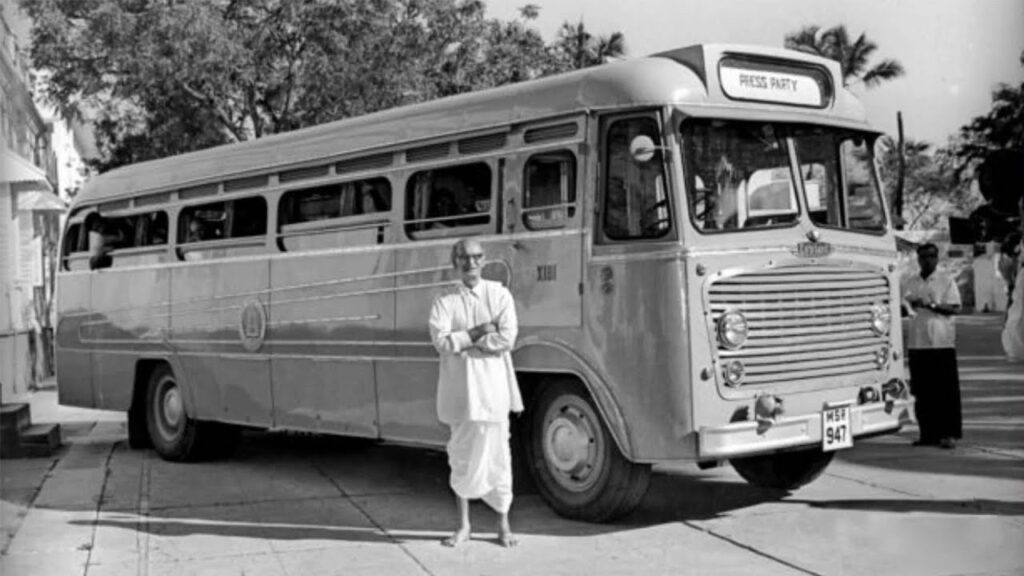
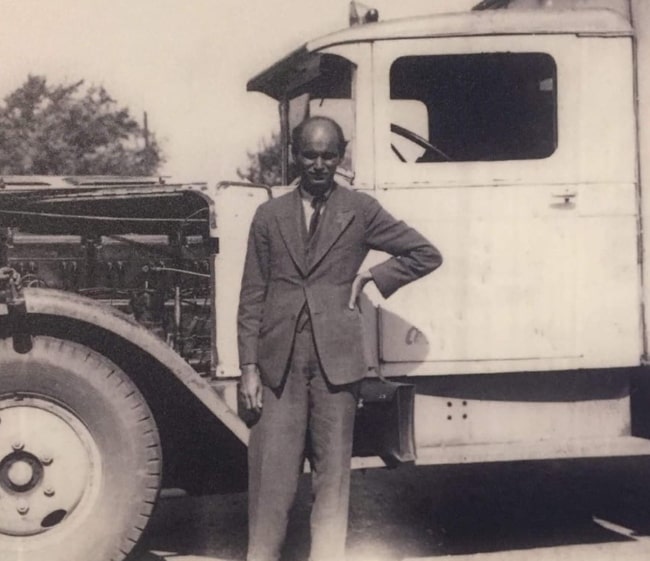
In 1920, he began with something remarkably modest— a single bus.
To most people, it was simply another vehicle.
To Naidu, it was the beginning of a much larger vision.
He believed India needed a transport system that was reliable, disciplined, and professionally managed.
That single bus eventually grew into Universal Motor Service (UMS), which became one of the most organised transport networks in the country.
But Naidu’s success was never measured by the size of his fleet.
He obsessed over details.
Why was a bus running late?
How could fuel consumption be reduced?
How could maintenance become more efficient?
How could passengers travel more safely and comfortably?
These weren’t management questions alone.
To Naidu, they were engineering problems waiting to be solved.
His emphasis on punctuality, preventive maintenance, operational discipline, and efficiency made UMS a benchmark in transport management during its time.
Many historians believe his contribution played an important role in shaping modern public transport in South India.
Yet his vision extended far beyond buses.
He understood something that many policymakers would recognise only much later.
A city cannot grow through roads alone.
It needs industries.
Industries need skilled people.
And skilled people require quality technical education.
That chain of thinking helped lay part of the foundation for Coimbatore’s transformation into one of India’s major industrial centres.
Today, Coimbatore is widely recognised as an engineering and manufacturing hub.
Its success belongs to many industrialists, engineers, entrepreneurs, and visionaries.
Among its earliest pioneers stood G. D. Naidu.
His contribution was so significant that he later came to be known as the “Wealth Creator of Coimbatore.”
Yet even after building industries and transforming transportation, he refused to stop exploring new challenges.
While others looked toward factories…
Naidu turned toward farms.
And once again, he did what he always did best—
He found a problem…
and began experimenting.
A Laboratory Called Agriculture
Most inventors spend their lives mastering a single field.
G.D. Naidu was different.
Once he had transformed transportation, he turned his attention to an entirely different challenge— agriculture.
At the time, one of India’s biggest concerns was poor agricultural productivity.
Naidu asked a simple question:
If machines can be improved, why can’t crops?
That question led him from workshops to farmlands.
He began experimenting with crops such as cotton, maize, and papaya, searching for varieties that could produce higher yields and better results for farmers.
One of his most recognised achievements was the development of a cotton variety that later became known as Naidu Cotton.
These were not casual experiments.
His farms gradually evolved into open-air laboratories where seeds, soil conditions, cultivation methods, and productivity were constantly tested and refined.
His work attracted the attention of some of India’s greatest scientific minds.
Nobel Prize-winning physicist Dr. C. V. Raman admired his experimental spirit.
So did the legendary engineer Sir M. Visvesvaraya, who recognised the significance of Naidu’s practical approach to innovation.
Yet Naidu remained unsatisfied.
He realised that new inventions alone would never transform a nation.
Nor would improved crops.
India also needed people capable of building, repairing, improving, and creating technology themselves.
That realisation gave birth to his next mission— Technical education.
“Don’t Chase Degrees. Build Skills.”
Long before the world popularised terms like Skill Development, Hands-on Learning, or Experiential Education, G. D. Naidu had already begun advocating the same philosophy.
He believed a nation’s future did not depend on importing machines.
It depended on producing people who understood those machines.
People who could build them.
Improve them.
And create better ones.
His definition of education differed radically from the conventional thinking of his time.
According to Naidu, an engineer could never be created by textbooks alone.
Students needed to work with machines.
They needed to dismantle them.
Make mistakes.
Solve real problems.
And learn with their own hands.
With this vision, he played a key role in establishing Arthur Hope Polytechnic in Coimbatore in 1945.
The institution would later become one of India’s important centres for technical education.
Naidu himself served as its first Principal.
But even there, he refused to follow tradition simply because it was tradition.
He questioned everything.
Did engineering really require years of classroom lectures?
Could practical training produce capable engineers in less time?
Why shouldn’t students spend more time in workshops than inside classrooms?
These ideas were revolutionary for that era.
Naidu proposed major reforms to engineering education.
He wanted practical work to become the heart of technical learning rather than its final stage.
Not everyone welcomed these ideas.
His disagreements with the administration gradually intensified, and he eventually resigned from the institution he had helped build.
History, however, has an interesting way of rewarding ideas that arrive too early.
Today, universities across the world actively promote:
– Skill-Based Learning
– Hands-on Training
– Experiential Education
– Learning by Doing
– Industry-Oriented Curriculum
Ironically, these are the very principles G. D. Naidu had been advocating in India nearly eight decades ago.
Perhaps this is why describing him merely as an inventor doesn’t do justice to his legacy.
He was something far rarer—
a visionary who consistently thought decades ahead of his time.
Learning From the World
One of Naidu’s greatest strengths was that he never believed knowledge belonged to a single classroom, institution, or even country.
He learned from machines.
He learned from workers.
He learned from the markets.
And whenever the opportunity arose, he learned from the world.
During his travels across Europe and the United States, he visited factories, observed manufacturing systems, studied emerging technologies, and interacted with engineers.
He wanted to understand a larger question:
What makes an industrial nation truly successful?
The answer, he realised, had very little to do with speeches.
Strong nations were built through factories.
Laboratories.
Skilled workers.
Discipline.
Efficiency.
And systems that encouraged innovation instead of resisting it.
When he returned to India, he didn’t simply bring back new ideas.
He tried to adapt them to Indian realities.
He established industries.
Strengthened technical education.
Improved transportation.
Experimented with agriculture.
And repeatedly demonstrated that India did not have to remain a nation that merely imported technology.
It could become a nation capable of creating it.
Dreams Far Ahead of Their Time
The more one studies G. D. Naidu, the harder it becomes to believe how many different fields he touched.
He wasn’t satisfied with improving existing technologies.
He wanted to make them accessible.
Affordable.
Practical.
Useful for ordinary people.
That philosophy can be seen in several remarkable projects that, even today, feel astonishing.
The ₹2,000 Car That Came Too Early
For most Indian families in the early 1950s, car ownership was merely a pipe dream.
Cars were expensive, scarce, and viewed as luxury items.
Naidu imagined a different future.
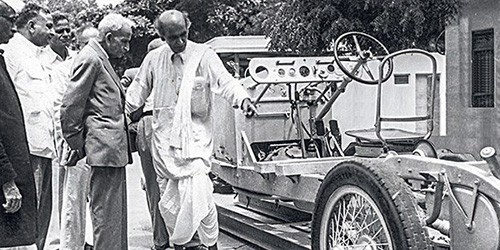
In 1952, he developed a prototype for a two-seater car that he believed could be produced for around ₹2,000—an extraordinarily low price for its time.
His dream was simple.
A car should not be reserved for the wealthy.
It should become an affordable means of transport for ordinary Indians.
Unfortunately, the project never entered mass production.
Had it succeeded, India’s automobile story might have unfolded very differently.
A Concrete House in Just Eleven Hours
Naidu’s curiosity extended far beyond machines and vehicles.
On one remarkable occasion, he demonstrated that a low-cost concrete house could be constructed in approximately eleven hours.
The objective wasn’t to set a record.
It was to prove a point.
With the right engineering, construction could be faster, stronger, and significantly more affordable.
Even today, when rapid and affordable housing is a global challenge, the idea feels surprisingly modern.
Technology Should Belong to Everyone
During the 1940s, owning a radio was a luxury few Indians could afford.
A good radio could cost around ₹175, placing it well beyond the reach of the average household.
Naidu believed technology should never remain the privilege of a small elite.
He announced that he could manufacture a five-valve radio for approximately ₹70.
The message behind the product was far more important than the product itself.
Technology should become accessible.
Not exclusive.
That belief shaped many of his innovations throughout his life.
The Curious Mind Behind the Camera
Most people know G. D. Naidu as an inventor.
Far fewer know that he was also a gifted photographer and filmmaker.
During his travels abroad, he documented important historical events and captured rare images of some of the twentieth century’s most influential personalities.
His camera recorded the funeral procession of King George V in London.
He also photographed leaders such as Mahatma Gandhi, Jawaharlal Nehru, and Subhas Chandra Bose.
For Naidu, a camera was no less fascinating than an engine.
He even worked on improvements to camera lens mechanisms, reflecting the same desire to refine and improve every technology he encountered.
He developed a distance-adjustment mechanism for film cameras, enabling photographers to achieve faster and more precise focus.
It reflected a characteristic trait that defined much of Naidu’s work—not always inventing something entirely new, but finding practical ways to make existing technology perform better.
Whether it was a machine, a vehicle, or a camera—
His instinct remained the same.
Observe.
Understand.
Improve.
‘He Didn’t Bring Home Machines’
He Brought Home Ideas.
Naidu’s overseas visits were never meant for sightseeing.
He spent his time inside factories, workshops, laboratories, and manufacturing facilities.
He observed.
Asked questions.
Learned from engineers.
Studied production methods.
And then returned to India with something far more valuable than imported equipment—
New ways of thinking.
He rarely copied foreign technology.
Instead, he tried to adapt it to Indian conditions.
Simpler.
More affordable.
More practical.
Today, this approach is often described as frugal innovation.
Many would also associate it with the spirit behind Make in India.
Remarkably, Naidu was practising this philosophy decades before either term became popular.
An Award-Winning Blade
Among Naidu’s lesser-known achievements was the development of an exceptionally thin shaving blade.
In 1936, it received recognition at the Leipzig Trade Fair in Germany—an impressive international achievement for an Indian innovator at the time.
It was yet another reminder that his work was not confined to India alone.
His engineering skills had begun attracting global attention.
‘One Life — Countless Laboratories’.
Perhaps the most extraordinary aspect of G. D. Naidu’s life is that he never allowed himself to be confined by academic disciplines.
One day, he worked on engines.
The next day on the radio.
Then cameras.
Agriculture.
Construction.
Public transport.
Education.
Industrial manufacturing.
To him, science was never divided into separate subjects.
Every problem was a new laboratory.
Every challenge was an invitation to experiment.
That is why it is almost impossible to describe him with a single title.
Inventor.
Industrialist.
Engineer.
Educator.
Agricultural experimenter.
Photographer.
Filmmaker.
Innovator.
He was all of these—
And perhaps something even greater.
A lifelong learner who believed that curiosity has no boundaries.
Why Did India Forget G. D. Naidu?
This is perhaps the most difficult question of all.
How does a man who left school after the third grade…
…go on to build industries,
…develop more than a hundred inventions,
…reshape public transport,
…experiment with agriculture,
…reimagine technical education,
…and yet remain largely unknown to the very nation he tried to serve?
The answer is not as simple as it may seem.
Some historians believe that many of Naidu’s ideas arrived far ahead of their time.
His vision of an affordable people’s car…
His proposals to radically reform engineering education…
And several of his industrial initiatives often clashed with the policies, priorities, and bureaucratic systems of that era.
At the same time, much of his work remained centred around Coimbatore and southern India.
Unlike many national figures, his achievements were never documented or promoted on a scale that reflected their true significance.
As the decades passed, new industries emerged.
New scientific icons captured the public imagination.
School textbooks changed.
History moved forward.
Some names grew larger.
Others slowly faded into the margins.
Today, it is striking that while several international historians of technology acknowledge G. D. Naidu’s contributions, many students in India have never even heard his name.
That raises an uncomfortable question.
Are we good at celebrating those who worked quietly rather than loudly?
Every reader may arrive at a different answer.
But one conclusion is difficult to ignore.
You can’t measure a person’s worth by their trophies or status. A person’s true legacy lies in their character and actions, far beyond the reach of public recognition.
Sometimes the true value of an innovator becomes visible only decades later, when the world finally catches up with ideas that once seemed impossible.
In many ways, G. D. Naidu belonged to that rare category of people.
He wasn’t merely solving the problems of his own generation.
He was imagining the needs of future ones.
More Than an Inventor
Calling G. D. Naidu simply an inventor would be an understatement.
He was an engineer without an engineering degree.
An educator who challenged conventional education.
An industrialist who believed technology should remain affordable.
A transport pioneer who viewed efficiency as engineering.
An agricultural experimenter who treated farms as laboratories.
A photographer who documented history.
Above all, he was a relentless learner who refused to accept that curiosity should have limits.
Perhaps that is why his story deserves to be remembered.
Not because every invention succeeded.
Not because every dream became reality.
But because he dared to ask questions that very few people were asking in his time.
And history often moves forward because of people like him.
Major Contributions, Innovations & Achievements of G. D. Naidu
Electrical & Electronics
- – India’s first indigenous electric motor (pioneering contribution)
- – Rasant electric razor
- – Ultra-thin shaving blade
- – Five-valve UMS radio
- – Electronic counting device
- – Magno-Flex testing unit
- – Carbon resistor manufacturing
- – Mica capacitor manufacturing
- – Tape recorder development
- – Radiogram manufacturing
- – Improvements in domestic electrical appliances
- – Experiments with small DC motors
Mechanical Innovations
- – Kerosene-powered fan
- – Fruit juicer
- – Mechanical calculator
- – Tamper-resistant vote-recording machine
- – Camera lens distance adjustment mechanism
- – Independent work on four-stroke internal combustion engines
- – Indigenous manufacturing of machine spare parts
- – Technical redesign of industrial machinery
Automobile & Transport
- – Prototype of a ₹2,000 two-seater people’s car
- – Scientific bus maintenance system
- – Bus timing display system
- – Transport management model
- – Indigenous automobile spare parts
- – Efficient vehicle servicing methods
- – Founder of Universal Motor Service (UMS)
- – Time-management systems in public transport
Industry
- – National Electric Works (NEW)
- – UMS Radio Factory
- – UMS Razor Factory
- – Multiple manufacturing units
- – Indigenous machine production
- – Low-cost industrial solutions
- – Improvements in production processes
Agriculture
- – Naidu Cotton
- – High-yield cotton varieties
- – High-yield maize
- – High-yield papaya
- – Hybrid crop experiments
- – Scientific farming practices
Construction
- – Demonstration of an approximately 11-hour low-cost concrete house
- – Fast and economical construction techniques
Photography & Film
- – Filming major historical events
- – Filming the funeral of King George V
- – Rare photographs of Mahatma Gandhi
- – Jawaharlal Nehru
- – Subhas Chandra Bose
- – Industrial documentary filmmaking
Education
- – Key role in establishing Arthur Hope Polytechnic
- – Hands-on technical education model
- – Early advocacy of Learning by Doing
- – Proposed reforms in engineering education
- – Strong emphasis on skill-based learning
Public Utility & Social Innovation
- – Affordable technology for ordinary citizens
- – Low-cost engineering solutions
- – Promotion of scientific awareness
- – Science exhibition initiatives
- – Efforts toward establishing a G. D. Science Museum
- – Employee welfare initiatives and research scholarships
Final Reflection – The Deep Dive:
Some people leave behind monuments – Others leave behind ideas.
Monuments weather with time – Ideas do not.
Perhaps G. D. Naidu’s greatest invention was not a machine at all.
Perhaps it was the belief that curiosity, determination, and self-learning can achieve what formal qualifications sometimes cannot.
And maybe that is the reason his story still matters today.
About The Overlooked –
History is not written only by famous names. Countless individuals, ideas, and contributions gradually fade from public memory, even though their impact continues to shape our lives.
“The Overlooked” is an editorial series by TheWhyLens that seeks to restore recognition through facts, historical context and balanced analysis—not to glorify individuals, but to acknowledge the place they have rightfully earned in our collective memory.
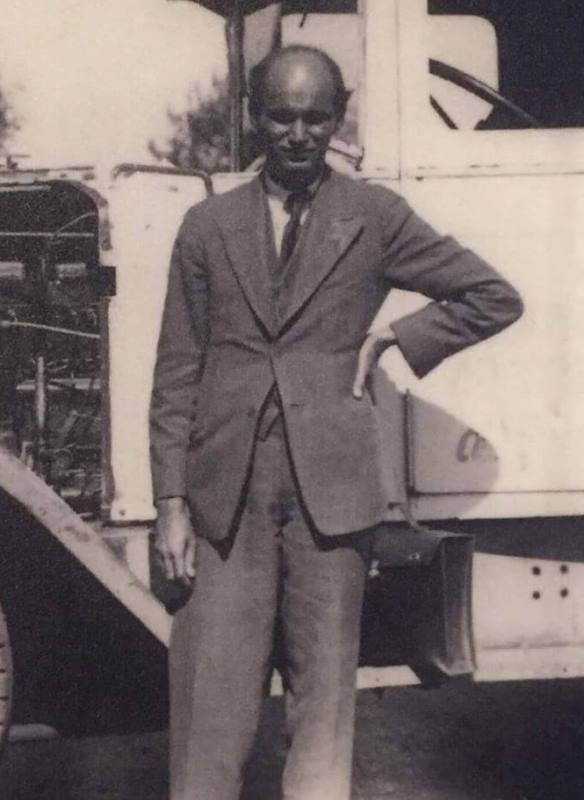
Rare Historical Photographs
The photographs below have been compiled from publicly available historical and archival sources for educational and documentary purposes. If any image attribution needs correction, please contact us.
I have never heard his name before. Our history books are devoid of local heroes, ideals, contributors, thinkers. We look down upon them. We are taught about foreign ones…. There is a long list of our forgotten heroes. G D Naidu is one of them.
Thanks for sharing this story.
Thank you so much, Sheela Ji. 🙏
You have beautifully summed up the very question that inspired this article. India has been blessed with countless innovators, thinkers and nation-builders whose contributions deserve to be remembered alongside the more familiar names we read about.
G. D. Naidu is certainly one of them, and this article is just a small effort to bring such remarkable personalities back into the conversation. I hope this series encourages more readers to discover and celebrate these forgotten chapters of our own history.
Thank you for reading and for sharing your thoughtful perspective. It truly means a lot.